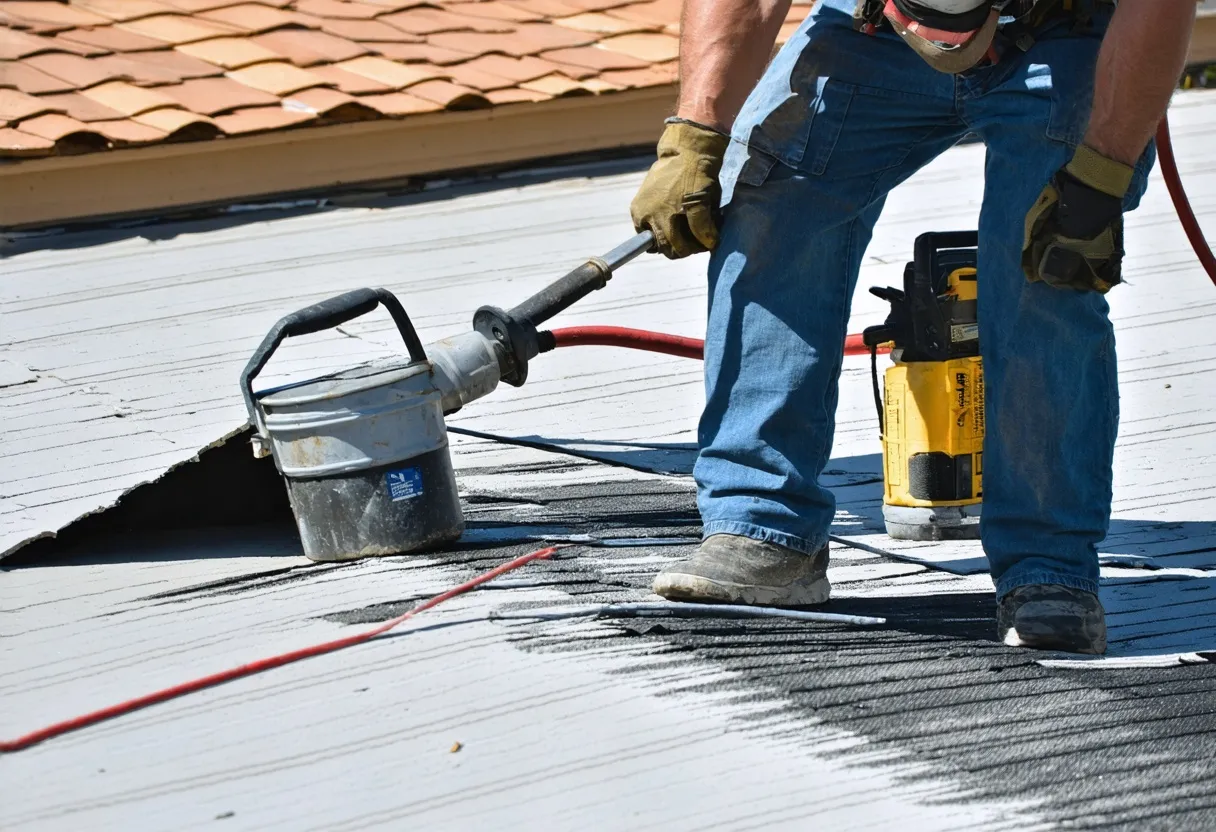
When a monsoon cell rips through Glendale at 2 a.m. and rain is pouring through your ceiling, you don't need a quote next week — you need emergency roof repair in Glendale tonight. Our crews handle 24 hour roof repair and same day roof repair Glendale AZ homeowners call for after storms, wind events, and sudden leaks, with tarp-and-stabilize service available around the clock and permanent repairs scheduled as soon as it's safe to get on the roof. Every job is priced with upfront numbers before work starts, and financing is available for repairs that can't wait on an insurance check. Learn more about our full range of services on the Roofing Glendale home page.
24-Hour Emergency Roof Repair When You Need It Most
Roof emergencies don't wait for business hours. A shifted tile during a monsoon microburst, a wind-lifted shingle section after a summer haboob, or a sudden interior leak in the middle of the night all call for the same thing: a fast, competent response that stops water intrusion before it reaches insulation, drywall, and your family's belongings. Our emergency roof repair Glendale team answers calls 24 hours a day, dispatches a licensed technician, and stabilizes the roof the same day in the vast majority of cases.
Emergency service isn't limited to storm damage. We also respond to:
- Active leaks during or immediately after rain
- Wind-damaged or missing shingles and tiles
- Fallen tree limbs or debris punctures
- Failed flashing around chimneys, vents, and skylights
- Ponding water and membrane splits on flat or foam roofs
- Cracked or slipped tile creating an open path for water
Emergency Tarp Roof Service and Temporary Stabilization
When a permanent repair can't happen immediately — because it's still raining, it's dark, or materials need to be ordered — our first priority is a professional emergency tarp roof service to get the structure watertight. We don't just throw a blue tarp over the damage; we secure heavy-duty tarping with proper anchoring so it survives continued wind and rain, seal exposed edges, and photograph the damage thoroughly. That documentation becomes important later if you're filing an insurance claim, and it gives you a clear record of what was damaged and when.
A temporary tarp is a stopgap, not a fix. Once the weather clears, we return to install a permanent repair matched to your roofing material, and we walk you through the timeline so you're never left guessing how long the tarp needs to hold.
Storm Damage Roof Repair Built for Arizona Weather
Storm damage roof repair in Glendale looks different than it does in other parts of the country. Monsoon season brings intense, fast-moving thunderstorms with damaging wind gusts and occasional hail, often arriving with little warning. Dust storms can drive debris into roofing surfaces, and heavy, brief downpours expose weak points in flashing and underlayment that a slow, steady rain never would. Our crews are trained specifically on how Arizona roofing systems fail under these conditions, not generic wind-and-rain assumptions borrowed from wetter climates.
Beyond the storm itself, Glendale's long, intense summer heat puts roofing materials through repeated cycles of daytime heat and overnight cooling. That ongoing expansion and contraction is a major contributor to cracked tile, brittle shingle sealant, and underlayment that degrades faster than it would in a milder climate. When we inspect storm damage, we're also checking for the heat-related wear that made the roof more vulnerable to that storm in the first place.
Our Emergency Response Process, Step by Step
- Call intake: You describe the damage and we ask a few quick questions — active leak, visible material loss, safety concerns — to prioritize dispatch.
- Dispatch and arrival: A licensed technician is sent to your Glendale address, typically the same day for active emergencies.
- Damage assessment: We inspect the affected area and surrounding roof sections, since storm damage is rarely confined to one spot.
- Stabilization: If conditions require it, we install emergency tarping or temporary sealing to stop water intrusion immediately.
- Written estimate: You receive a clear, itemized quote before any permanent repair work begins — no surprise invoices.
- Permanent repair: Once approved, we complete the fix using materials matched to your existing roofing system.
- Documentation: Photos and notes from the job are kept on file, which is especially useful if you're pursuing an insurance claim.
Roofing Systems We Repair
Tile Roof Repair
Tile is one of the most common roofing materials in the Glendale area, valued for its durability and heat resistance, but tile roofs fail in specific ways: cracked or slipped tiles, broken hips and ridges, and deteriorated underlayment beneath tiles that still look fine from the ground. Because tile is heavy and brittle underfoot, walking a tile roof without training risks breaking more tiles than were originally damaged. Our tile roof repair technicians know how to move across tile safely, source matching profiles and colors, and address the underlayment issues that are usually the real cause of a tile roof leak.
Shingle Roof Repair
Asphalt shingle roofs are common on Glendale homes and are generally the fastest system to repair in an emergency. Wind can lift or tear shingles, and intense sun exposure over time makes sealant strips brittle, so shingles that would normally stay locked down come loose in a strong gust. Our shingle roof repair addresses missing tabs, exposed nail heads, cracked shingles, and compromised flashing, using materials matched to your existing roof age and color as closely as possible.
Flat and Foam Roof Repair
Flat and foam roofs — common on additions, patios, and some full home roofs in the area — fail differently than pitched roofs. Ponding water, membrane blistering, and foam degradation from UV exposure are the usual culprits. Our flat/foam roof repair process includes locating the actual source of the leak (which is often several feet from where water shows up inside), cutting out and replacing compromised foam or membrane sections, and recoating exposed areas to restore the roof's protective seal.
Roof Inspection: Before and After Repairs
Every emergency call includes a roof inspection that goes beyond the immediate damage. Storms rarely cause a single, isolated problem — a section of lifted shingles or a cracked tile is often accompanied by smaller issues nearby that haven't started leaking yet. We check flashing, vents, valleys, and the general condition of the surrounding roof so you know exactly what you're dealing with, not just the symptom that prompted the call. If you're not in an active emergency but want a proactive check before monsoon season, we also perform standalone roof inspections to catch problems while they're still small and inexpensive to fix.
Insulation and Underlayment
What's under the visible roofing material matters as much as the material itself. Underlayment is your roof's secondary water barrier, and in a hot climate it breaks down faster than manufacturers' generic lifespan estimates suggest, especially on tile roofs where the underlayment is doing most of the actual waterproofing work while the tile handles impact and sun exposure. When we open up a section for repair, we check underlayment condition and replace it where it's cracked, brittle, or no longer bonded properly. We also inspect attic insulation when a leak has been active for a while, since saturated insulation loses its effectiveness and can hold moisture against your ceiling long after the roof itself is repaired.
What Affects the Cost of Emergency Roof Repair
No two emergency repairs cost the same, but the main variables are consistent:
- Roofing material — tile repair generally costs more than shingle due to material and handling requirements
- Extent of damage — a single cracked tile is a different job than a section of roof stripped by wind
- Accessibility — roof pitch, height, and access around the home affect labor time
- Time of call — after-hours and storm-surge demand can affect scheduling, though we quote before work begins either way
- Underlying damage — underlayment or decking that needs replacement beneath the visible damage adds to the scope
- Material matching — sourcing a specific tile profile or shingle color can affect cost and timeline
We provide a written estimate before any permanent repair begins, so you're approving a number, not a surprise. For repairs that need to happen before an insurance settlement comes through, we offer financing options, including 0% interest offers for qualifying repairs, so a storm doesn't force you to choose between a dry roof and your savings.
Warranties on Our Work
Roof repairs involve two kinds of coverage: the manufacturer's warranty on materials themselves, and our workmanship warranty covering the labor and installation. We stand behind the repairs we perform and will explain, in plain language, exactly what's covered before you approve any work — including what voids a warranty (like unrelated storm damage or unrelated maintenance neglect) so there are no surprises down the road.
Licensing, Insurance, and Credentials
Roofing work in Arizona should only be performed by a contractor licensed through the Arizona Registrar of Contractors, and we carry that licensing along with general liability insurance. Before hiring anyone for roof repair, ask for their ROC license number and confirm it's active — it's a simple check that protects you if something goes wrong. We're also happy to have prospective customers look up our standing with the Better Business Bureau as part of their due diligence.
Service Area: Glendale and the Northwest Phoenix Metro
We provide emergency and scheduled roof repair throughout Glendale, AZ, including neighborhoods around zip codes 85301 and 85308, and extend service into the broader Northwest Phoenix metro area, including Peoria, AZ. Homes near State Farm Stadium and throughout the surrounding Glendale corridor are within our standard response area for both emergency tarping and permanent repairs. If you're unsure whether your address falls within our coverage, call and we'll confirm before dispatching.
Get Your Upfront Quote
No pressure, no guesswork — just a clear price for your roof.
Ready for a Roof Built for Arizona?
Reach out for a straightforward, upfront quote.